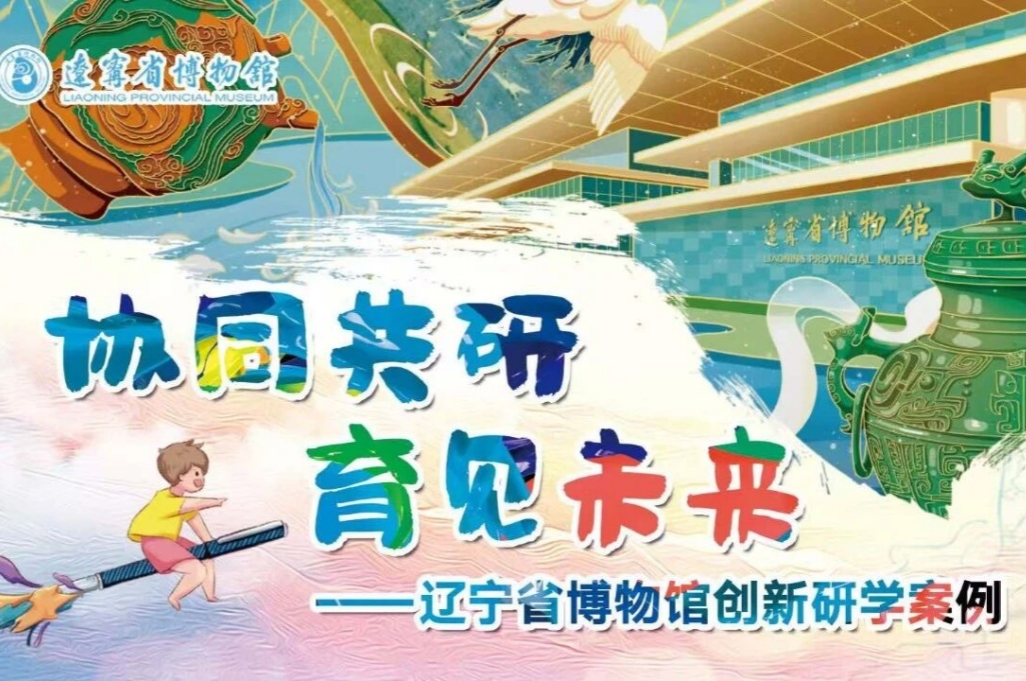
“The painting Lady Guoguo’s Spring Outing is coming to the Liaoning Provincial Museum!” This has been a hot topic in cultural and museum circles recently. On RedNote, discussions are buzzing about the museum’s upcoming grand exhibition, “China in Poetry and Painting: The Poetic Realm of Chinese Painting”, which is set to open on December 30, 2025. Museum enthusiasts from Denmark and the United States have already booked flights to Shenyang for a chance to see the legendary masterpieces.
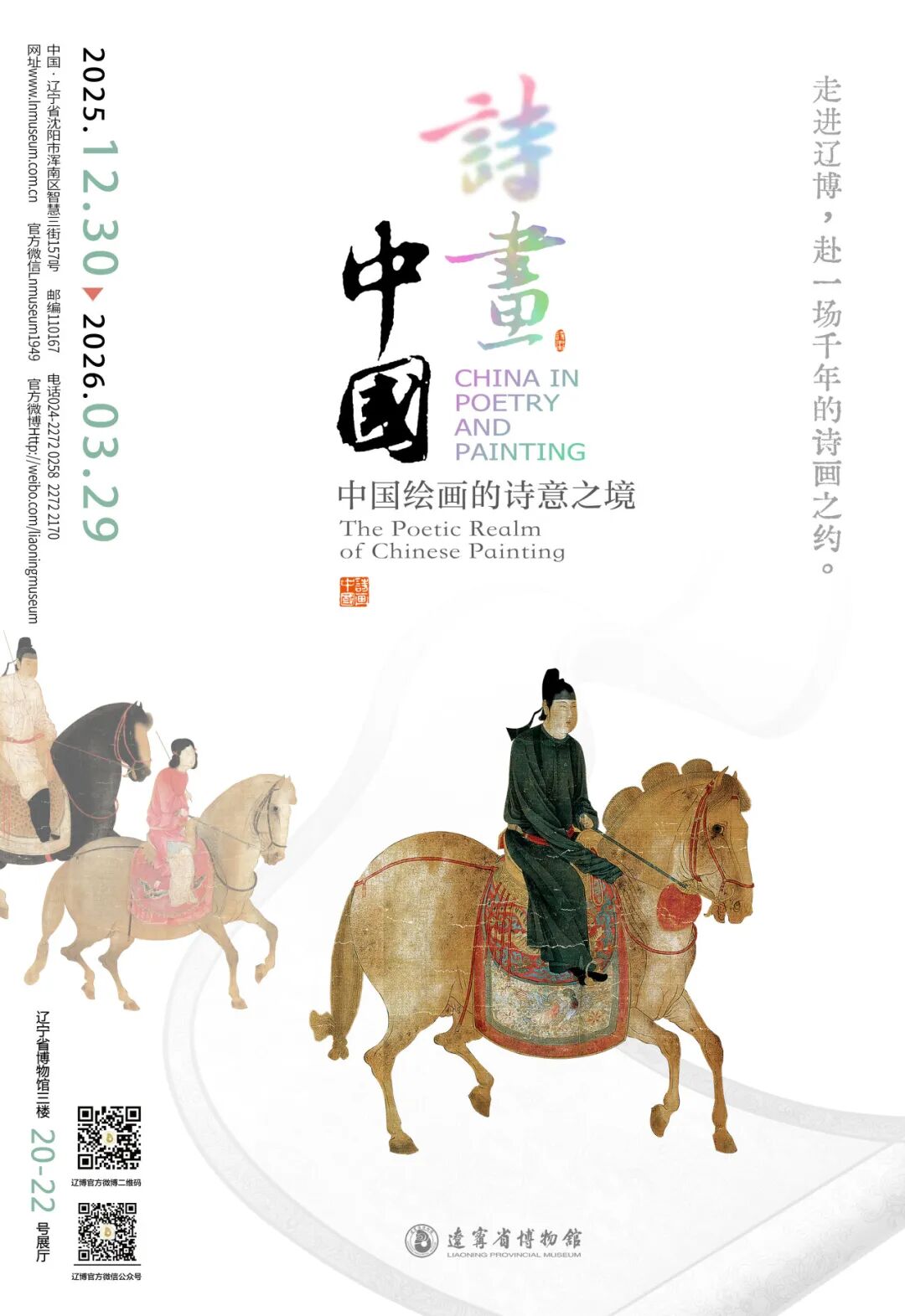
Chinese poetry and Chinese painting are sister arts that complement each other. Throughout history, exquisite paintings have inspired poets to wield their writing brushes, while profound and timeless poems have provided painters with endless inspiration, giving rise to and refining the genres of “poems on paintings” and “poetic paintings”. The deep integration of poetry, calligraphy, and painting ultimately crystallized into the three core elements of literati painting. Passed down over millennia, this fusion has forged a uniquely Eastern artistic paradigm.
This exhibition, “China in Poetry and Painting: The Poetic Realm of Chinese Painting”, takes this distinctive phenomenon in Chinese art history as its curatorial core. Using the development of poetry as a thread and starting from the perspective of “poetic painting”, it unveils for visitors the poetic codes embedded in Chinese painting. Tracing its origins to The Classic of Poetry, the exhibition follows the classic verses of literary masters through the ages—such as Tao Yuanming, Wang Wei, Li Bai, Du Fu, Su Shi, and Tang Yin—presenting a succession of magnificent paintings. It guides visitors on an immersive journey through an ocean of intertwined poetry and painting, allowing them to appreciate the eternal charm of traditional Chinese poetry and painting.
Hosting this exhibition represents an active attempt by the Liaoning Provincial Museum to collaborate with social forces, establishing a widely participatory, diverse, and well-managed social mobilization mechanism. Spanning three exhibition halls with a total area of 4,000 square meters, the exhibition will centrally display 120 pieces (sets) of precious calligraphy and painting works, including over 20 national first-class cultural relics. Masterpieces from the Liaoning Provincial Museum’s collection, such as the Song Dynasty copy of Zhang Xuan’s Lady Guoguo’s Spring Outing, the Song Dynasty work Ode to the Pure Temple (calligraphy by Emperor Gaozong of the Song Dynasty, paintings by Ma Hezhi), and Wen Zhengming’s Ming Dynasty painting Finding the Path to Peach Blossom Spring, will unfurl before the eyes of visitors.
To build a more comprehensive exhibition system, this exhibition has specially borrowed 28 pieces (sets) of fine calligraphy and paintings from ten renowned museums, including the National Museum of China, Shanghai Museum, Tianjin Museum, Guangdong Museum, Jilin Provincial Museum, Suzhou Museum, Yangzhou Museum, Nantong Museum, Shenyang Imperial Palace Museum, and Lyushun Museum. Rare treasures such as Wang Shen’s (the Song Dynasty) Misty River and Layered Peaks, the anonymous Song Dynasty work Wangchuan Villa, Yang Wujiu’s (the Song Dynasty) Plum Blossoms, and He Cheng’s (the Yuan Dynasty) Returning to the Village will gather at the Liaoning Provincial Museum, offering visitors an artistic feast that transcends regions and connects the past and present.
The Liaoning Provincial Museum continues to deepen its curatorial vision through this exhibition, thoughtfully balancing scholarly insight with engaging appeal. Employing a presentation style aligned with contemporary aesthetics, vivid and dynamic scene creation, and diverse, multidimensional interactive experiences, it allows the millennia-old art of poetry and painting to resonate with today’s audience, fostering an emotional connection that transcends time and space.
Departing from traditional art historical narratives, this exhibition focuses on an in-depth integration of formal design and content expression. Through innovative narrative logic and cutting-edge digital technologies, it transcends temporal and spatial boundaries, leading visitors on an immersive artistic journey that interweaves poetic sentiment and pictorial imagery, bridging the ancient and the modern, the East and the West.
Throughout the exhibition, the Liaoning Provincial Museum will host a series of scholarly lectures focused on the theme of poetry and painting. It will also offer meticulously curated learning programs and educational activities for young audiences. These will encompass classical poetry recitations, historical and cultural appreciation, and hands-on experiences in traditional calligraphy and painting. These activities are designed to help young people engage intimately with the deep roots of traditional Chinese culture.