Drawing from the treasures of its permanent collection, the Liaoning Provincial Museum has carefully selected two masterpieces of Song Dynasty calligraphy—the Running Script: Self-Inscribed Poems by Lu You (Southern Song Dynasty) and the Running Script: Bai Juyi’s Poem by Emperor Gaozong (Zhao Gou) of the Southern Song Dynasty—to be released as digital collectibles. Through digital technology, the museum brings these treasured works beyond the confines of time and space, allowing audiences around the world to experience the elegance of Song Dynasty calligraphy with a simple tap. These two artistic treasures, embodying the intellectual spirit and refined aesthetics of Song literati culture, are now available on the Topnod Digital Collectibles platform, inviting audiences to embark on a cultural journey spanning nearly a millennium.
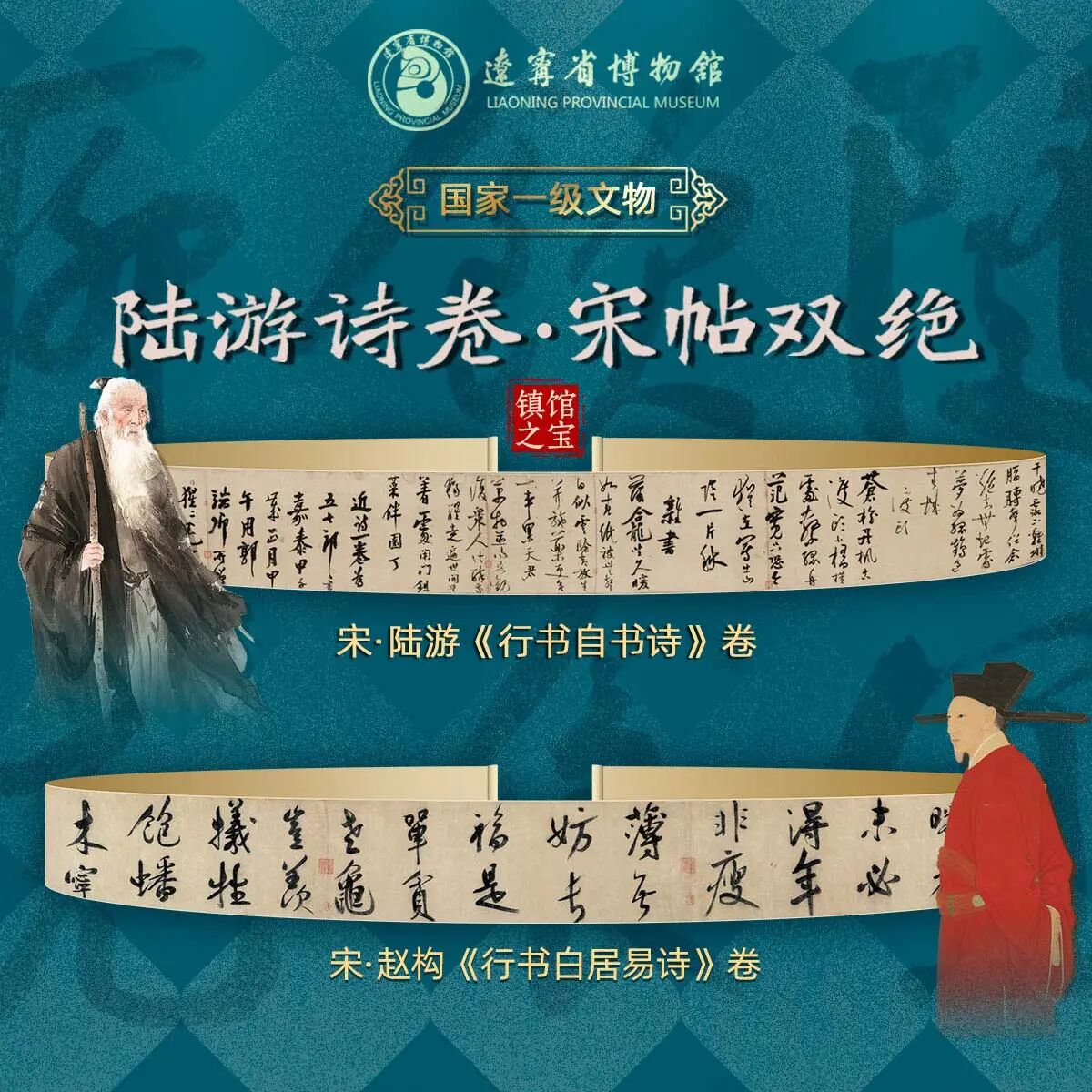
Chinese painting and calligraphy represent one of the most enduring traditions of Chinese civilization. Through brush and ink, generations of scholars and artists expressed their appreciation of nature, their emotions, and their philosophical ideals. Song Dynasty calligraphy is renowned for its emphasis on personal expression (shangyi, “valuing expressive intent”) and refined aesthetic charm. Beyond the celebrated “the Four Masters of the Song Dynasty”, Su Shi, Huang Tingjian, Mi Fu, and Cai Xiang—the artistic achievements of emperors and poets also occupy an important place in the history of Chinese calligraphy. Among the museum’s most distinguished holdings are Lu You’s Running Script: Self-Inscribed Poems and Emperor Gaozong’s Running Script: Bai Juyi’s Poem. The former is a manuscript in which the celebrated poet personally transcribed his own poems during his later years, while the latter is a mature example of Emperor Gaozong’s large-character running script. Together, they capture the essence of the Song Dynasty’s expressive calligraphic tradition.
As one of the greatest poets of the Southern Song Dynasty, Lu You composed nearly 10,000 poems throughout his lifetime. Created when he was eighty years old, Running Script: Self-Inscribed Poems is widely regarded as a masterpiece that unites literary brilliance with exceptional calligraphic artistry. More than a reflection of the poet’s state of mind in his later years, the work marks the culmination of his artistic achievement in calligraphy. The handscroll contains eight poems depicting the poet’s life after retiring to the countryside.
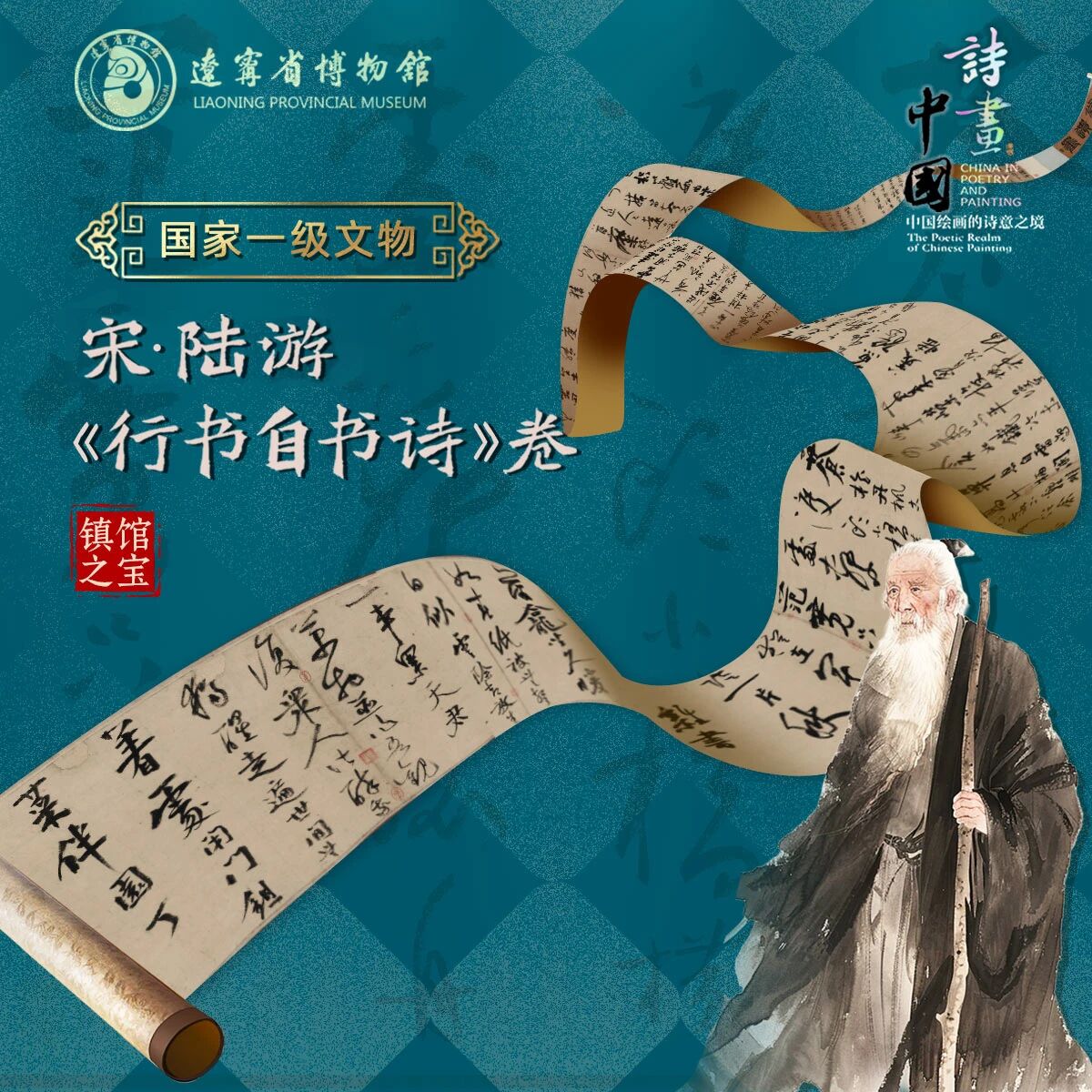
Its provenance is exceptionally well documented, having been collected and preserved by renowned connoisseurs across the Song, Yuan, Ming, and Qing dynasties. Colophons by distinguished figures such as Guo Bi, Yu Yong, and Shen Zhou remain on the scroll, providing valuable historical evidence of its transmission. The work later entered the Qing imperial collection before eventually becoming part of the collection of the Liaoning Provincial Museum. Every collector’s seal and every colophon bears witness to its thousand-year history, making the scroll an invaluable source for the study of Lu You’s later literary creation and the development of Song Dynasty calligraphy.
Recognized as one of the most accomplished calligraphers among Song emperors, Emperor Gaozong (Zhao Gou) developed a distinctive style by drawing upon the strengths of Huang Tingjian and Mi Fu. His mature calligraphy is characterized by elegance, balance, composure, and refined grace. His Running Script: Bai Juyi’s Poem is widely acknowledged as a representative masterpiece of his fully mature artistic style. The text transcribes Bai Juyi’s poem Self-Reflection (Ziyong), whose tranquil sentiment—“Be content with what fate has allotted; why concern oneself with the judgments of others?”—perfectly complements Zhao Gou’s calm and restrained brushwork. The scroll is written with only two large characters per line, each character approximately the size of a clenched fist. The brushwork is fluid yet controlled, combining rounded strength with structural vitality. Its rhythmic variation and expressive movement demonstrate the calligrapher’s remarkable command of the brush as well as his artistic sensitivity. The work transcends the written text, conveying an inner serenity and wisdom shaped by a lifetime of experience.
Beyond its artistic excellence, the scroll is also an important historical artifact. It bears the Song imperial seals “Imperial Calligraphy Treasure” (Yushu zhi Bao) and “Yushu” (“Imperial Calligraphy”), along with collectors’ seals from the Ming Dynasty connoisseur Xiang Dushou and the Qing imperial collection, providing a well-documented record of its transmission through history. As a result, the work serves not only as important material evidence for the study of imperial calligraphy and collecting practices during the Song Dynasty, but also as a cultural treasure that seamlessly integrates artistic form with literary significance.
Today, these once inaccessible masterpieces preserved within the museum’s collection are being brought to the public through cutting-edge digital technology. Using high-resolution imaging and advanced digital modeling, the Liaoning Provincial Museum has faithfully captured every detail of these two celebrated works.
Whether it is the emotionally expressive brushwork in Lu You’s Running Script: Self-Inscribed Poems or the subtle gradations of ink in Emperor Gaozong’s Running Script: Bai Juyi’s Poem, viewers can closely examine every nuance through high-definition digital viewing. By engaging with these digital collectibles, audiences are invited into a dialogue with the masters of the past and offered a unique opportunity to appreciate the profound artistry and enduring legacy of Chinese calligraphy.