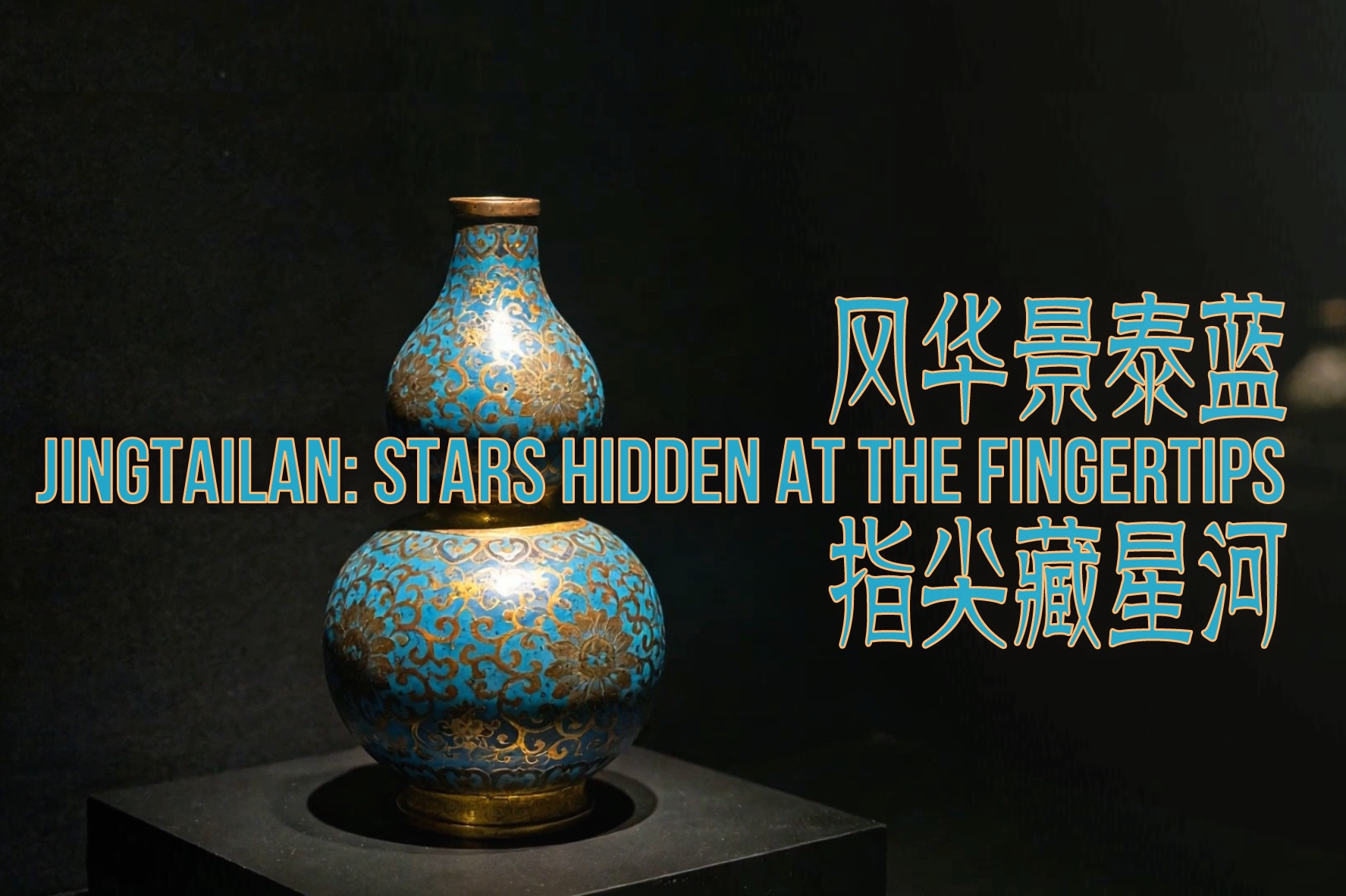
The enamel craft was introduced to China during the Yuan Dynasty, with its representative form, Jingtailan (Cloisonné enamel on a copper body), reaching its peak during the Ming and Qing Dynasties. Integrating various traditional crafts such as metallurgy, painting, and ceramics, Jingtailan has become a world-renowned artistic treasure.
From a cherished gem of ancient Chinese imperial families to a well-known symbol of Chinese culture today, the art of Jingtailan has been revitalized in the hands of the post-95s inheritor Bao Ziliang. LICC host Scarlett, along with Russian international student Anna, joined Bao Ziliang, an inheritor of the intangible cultural heritage (ICH) of Jingtailan craftsmanship, to explore this time-honored craft.
In making Jingtailan, crafters use metal wires to outline forms and fill them with colored glazes, creating the beauty and romance of traditional art—resplendent and exquisitely delicate. From marveling that “the glaze colors seem woven into the Milky Way” to lamenting that “my hands won’t obey,” the cloisonné enamel painting experience left Scarlett and Anna saying “aching waists, sore backs, and cramped fingers,” truly understanding the profound meaning of “Only a hundred trials can forge a masterpiece.” Under Bao Ziliang’s guidance, they ultimately completed coasters themed “A Thousand Li of Rivers and Mountains” and “Snow Elegance,” weaving classical poetic charm into daily life.
Bao Ziliang has combined traditional Jingtailan craftsmanship with modern DIY concepts, creating accessories, home decorations, and even co-branded trendy products popular among young people. Anna said in admiration, “Intangible cultural heritage is not an antique. It is a romance crafted by my own hands.”